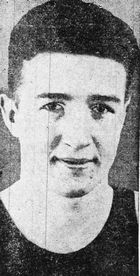
Bill McLaughlin
| Date and Place of Birth: | October 19, 1916 St. Mary's, PA |
| Date and Place of Death: | March 9, 1955 South China Sea |
| Baseball Experience: | Minor League |
| Position: | Pitcher |
| Rank: | Commander |
| Military Unit: | Fighter Squadron 64 (VF-64) US Navy |
| Area Served: | United States and Pacific |
William E. “Bill” McLaughlin was born on October
19, 1916, in the quiet town of St. Mary’s, Pennsylvania, the son of
Edward and Mary McLaughlin. His father, Edward, had once swung a bat for
a mining team in the coalfields of northeastern Pennsylvania, where
baseball was as much a release as it was a passion. The family’s
fortunes carried them westward to St. Mary’s, and soon after,
opportunity drew them east again to New Jersey. In Collingswood, the
McLaughlins put down roots, and it was here that Bill’s older brother
Tom made his mark as a gifted left-handed pitcher at Collingswood High.
Professional scouts came calling after Tom’s graduation in 1932, but
instead of signing a contract, he accepted a scholarship to Holy Cross -
arranged by none other than Connie Mack of the Philadelphia Athletics.
Tom’s promising arm faltered, yet his love for the game endured in
semi-pro diamonds across New Jersey, before he turned to teaching.
By the time Bill reached high school, the family had settled in Camden.
Like his brother, he was a southpaw, but his talents stretched far
beyond the pitcher’s mound. At Camden High, he lettered in four sports -
baseball, basketball, football, and track - embodying the athletic
spirit of the Depression-era youth. In those years, both Bill and Tom
lent their arms to Bucky Lai’s Hawaiian All-Stars, a barnstorming team
stitched together from Hawaiian-born players and local talent. Lai
himself had once played in the minors and for the famed Brooklyn
Bushwicks before assembling his traveling troupe. On one tour through
New England, Bill’s pitching silenced a top-rated team, much to the
dismay of radio star Rudy Vallée, who had wagered on the opposition.
Vallée confronted the young hurler with a sharp quip: “You don’t look
like no damn Hawaiian to me.”
Graduating in 1934, Bill advanced to Villanova College (now Villanova
University), where his left arm continued to draw the attention of major
league scouts. In 1939, he signed with the St. Louis Cardinals and was
sent to the Cambridge Cardinals of the Class D Eastern Shore League. His
rookie season was impressive: an 18–11 record, a 2.57 ERA across 38
appearances, and a respectable .241 batting average. The following year,
he climbed to the Rochester Red Wings of the Class AA International
League, even facing the Philadelphia Phillies in spring training. His
journey carried him west to the Sacramento Solons and then south to the
New Orleans Pelicans, where he posted a 3–5 record. The promise was
there, but history had other plans.
In December 1940, with Europe at war, Bill entered the US Navy. By April
1941, he was a commissioned aviator, earning his wings at NAS
Jacksonville, Florida. Even in uniform, baseball remained close. He
pitched for the Jacksonville team under former major leaguer George
Earnshaw before taking to the skies in PBY Catalina flying boats,
patrolling for submarines. The war years transformed him from ballplayer
to aviator, and when peace returned, he was nearly 29, too old to
rekindle a professional baseball career. Instead, he stayed with the
Navy, serving at Pensacola, Virginia Beach, and later Alameda,
California, where he built a family life with his wife Barbara and their
children Diane, Robert, and Stephen.
By 1953, Commander McLaughlin was assigned to the aircraft carrier USS
Essex (CV-9), leading Fighter Squadron 64 (VF-64), a unit flying Grumman
F9F Panther jet fighters. In February 1955, the Essex played a pivotal
role in the Cold War, covering the evacuation of Chinese Nationalists
from the Dachen Islands off Taiwan. VF-64 provided air cover, escorted
transports, and patrolled against Communist threats, ensuring the safe
withdrawal of soldiers and civilians under fire.
Tragedy struck only weeks later. On March 9, 1955, Commander McLaughlin
prepared for takeoff from the deck of the Essex. Standard procedure
called for full thrust from the Panther’s turbojet, aided by the
carrier’s catapult. But the engine faltered. His signal to abort came
too late. The catapult hurled the stricken jet forward, and it plunged
into the sea. Neither Bill nor his aircraft were ever recovered.
A memorial mass was held at Holy Saviour Roman Catholic Church in
Westmont, New Jersey on March 15, 1955. Today, his name is remembered at
Arlington National Cemetery and Calvary Cemetery in Cherry Hill, New
Jersey. A ballplayer turned naval aviator, whose life bridged the golden
age of baseball and the dawn of jet-powered naval aviation, and whose
story reflects both the promise and the peril of his generation.
|
Year |
Team |
League |
Class |
G |
IP |
ER |
BB |
SO |
W |
L |
ERA |
| 1939 | Cambridge | Eastern Shore | D | 38 | 238 | 68 | 97 | - | 18 | 11 | 2.57 |
| 1940 | Rochester | International | AA | 6 | 15 | - | 13 | - | 1 | 1 | - |
| 1940 | Sacramento | PCL | AA | 5 | 9.1 | - | 6 | - | 1 | 0 | - |
| 1940 | New Orleans | Southern Assoc | AA | - | 42 | - | 29 | 16 | 3 | 5 | - |
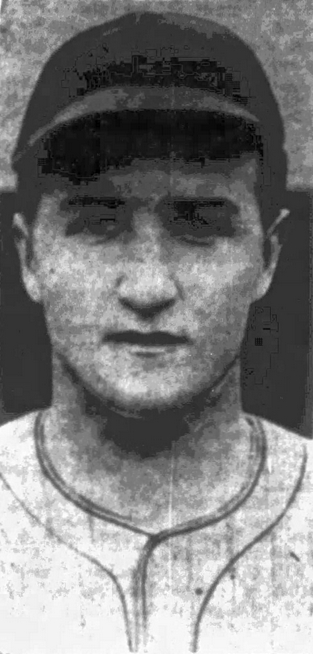
Bill McLaughlin with Camden High School
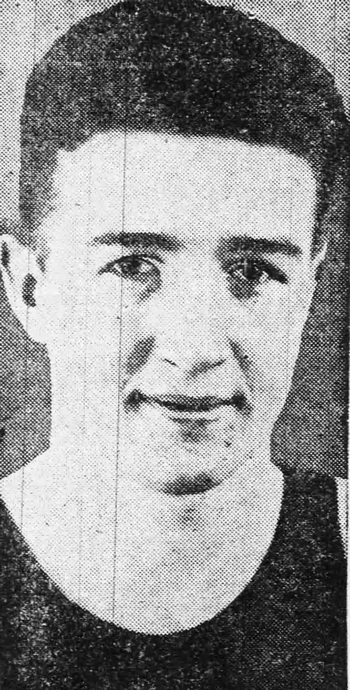
Bill McLaughlin
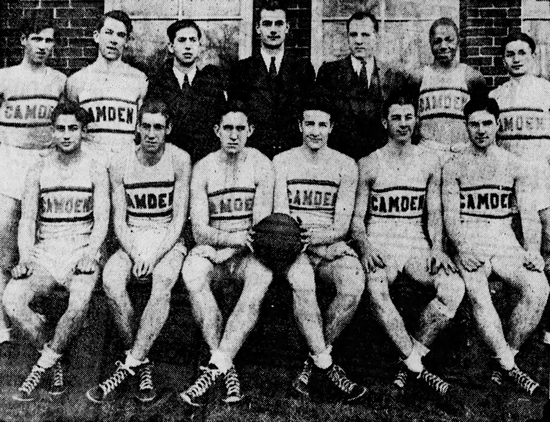
The Camden High School basketball team. Bill
McLaughlin is front row, third from right
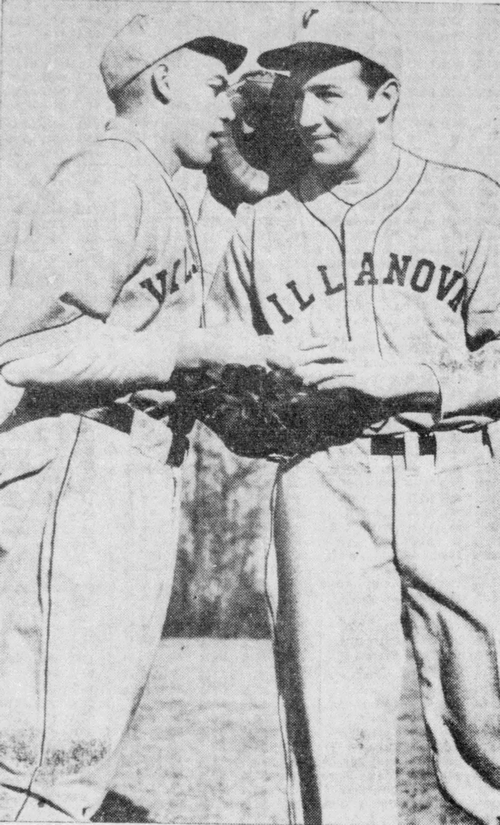
Bill McLaughlin (right) at Villanova with catcher
Michael Garback
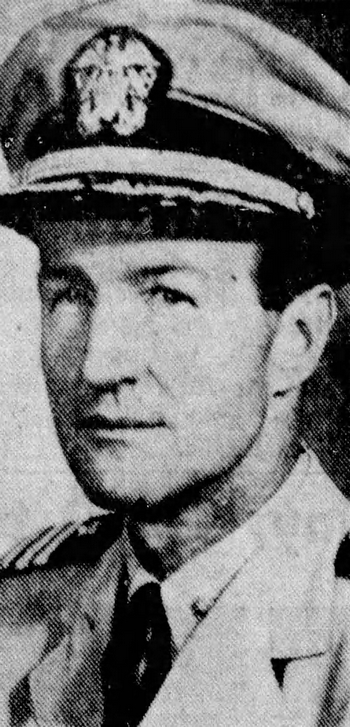
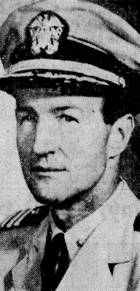
Commander William E. "Bill" McLaughlin. US Navy
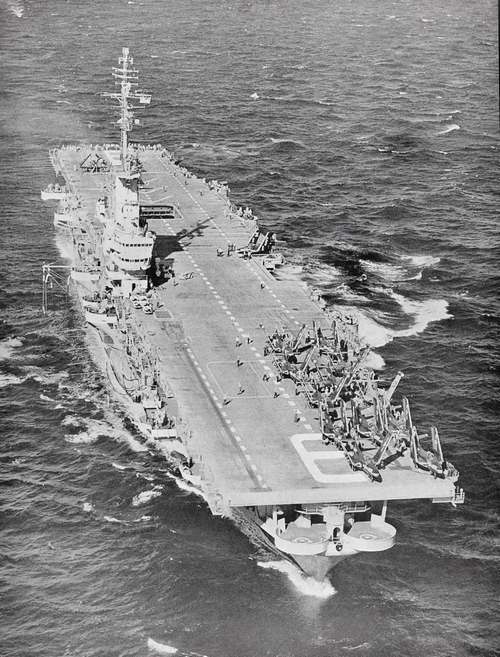
The USS Essex
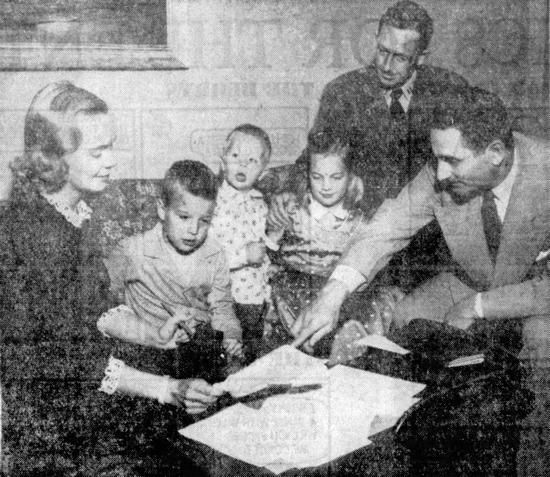
W. O. LaMarre (right) from the Social Security
Administration, explains security benefits to Barbara McLaughlin
following the tragic death of her husband. Their children - Robert,
Stephen and Diane - look on, with Lt. W. K. Toole, personnel director at
Alameda Naval Air Station. The family was
entitled to $141 a month in Social Security payments until
Stephen, who was 3 at the time, turned 18
Date Added December 14, 2025
Baseball's Greatest Sacrifice is associated with Baseball Almanac
Baseball's Greatest Sacrifice is proud to be sponsored by